Treatability Study & Laboratory Services
Performing state-of-the-art biological, solidification/stabilization and dewatering treatability studies.
Performing state-of-the-art biological, solidification/stabilization and dewatering treatability studies.
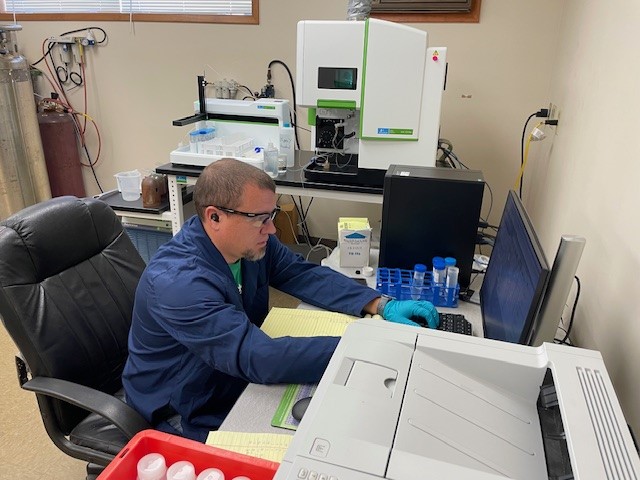
Since 1989, Sevenson has performed in-house treatability studies at its state-of-the-art environmental laboratory. With extensive chemical and biological expertise in hazardous waste remediation science, Sevenson’s lab staff develop new treatment techniques and reviews proposed treatment methodologies, focusing on three main categories:
Sevenson can receive untreated samples and perform comprehensive in-house testing, including analytical analysis using our advanced inductively coupled plasma – optical emission spectrometer (ICP-OES) and Atomic Absorption Spectrometer (AAS) instruments.
Sevenson conducts geotechnical treatability studies using a range of reagents to support project goals. These studies range from small-scale testing to pass paint filter tests required for landfill disposal, to large-scale in-situ solidification/stabilization evaluations focused on achieving critical unconfined compressive strength. The results help ensure site safety for personnel and equipment while confirming that project specifications and timelines can be met.
Sevenson utilizes a variety of technologies for dewatering treatability studies, including geomembrane filter tubes/bags, filter presses, centrifuges, bag filters, mobile treatability units, and more. Our technicians are highly skilled in optimizing flocculation and coagulation processes, as well as in selecting and applying the most effective methods for dewatering sediment.
Through treatability studies, project schedules may be condensed at reduced costs as well as enable Sevenson to engineer complete dredging, dewatering, wastewater treatment, and stabilization/solidification systems. Components of the treatability study include the following evaluations:
Viability Study – Demonstrates the technology’s capacity to treat waste and supports the development of full-scale budget estimates.
Bench-Scale Study – Optimizes treatment on representative samples, validates effectiveness to stakeholders, meets USEPA QA/QC Level II, and supports accurate bid estimates.
Engineering-Scale Study – Replicates optimized bench-scale process results on a larger sample quantity to meet additional client, consultant, and regulatory agency needs.
Pilot-Scale Study – Performed on site using down-scaled processing equipment, this phase evaluates customized material handling methods for varied waste types and supports regulatory acceptance of the process.
Projects