Environmental Dredging
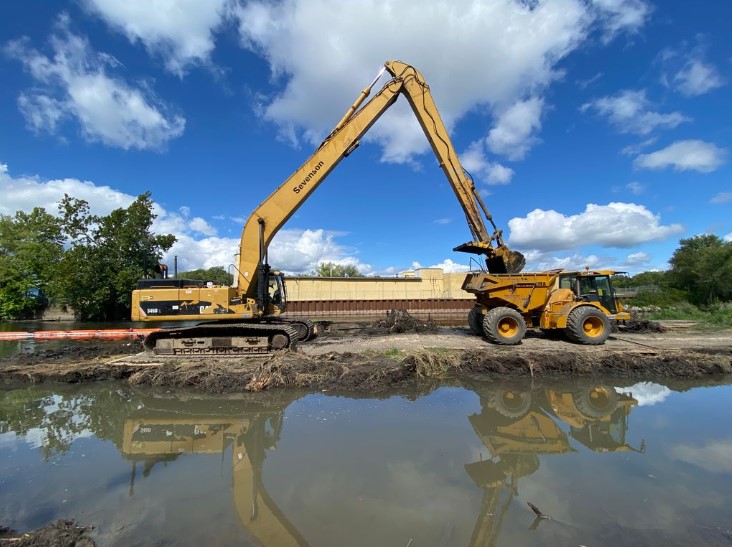
Sevenson’s dredging capabilities include both mechanical, hydraulic, and hybrid dredging systems. Sevenson’s hydraulic dredging capabilities includes diver assisted, cutterhead, and horizontal auger dredging
Sevenson’s dredging capabilities include both mechanical, hydraulic, and hybrid dredging systems. Sevenson’s hydraulic dredging capabilities includes diver assisted, cutterhead, and horizontal auger dredging
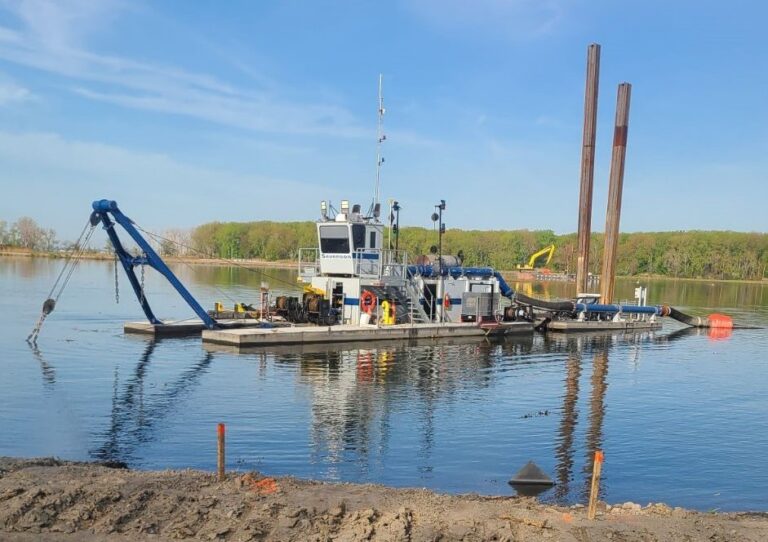
Sevenson dredges and dewaters sediments from a range of marine environments, including lakes, rivers, harbors, creeks, coves, marshes, ponds and pits.
Sevenson began the transition to contaminated sediment remediation in 1993 when Sevenson was awarded the first large-scale Superfund site sediment remediation project at the Marathon Battery Site, located in Cold Springs, NY, on the Hudson River where we performed the mechanical dredging of 70,000 CY of heavy metals-contaminated sediment.
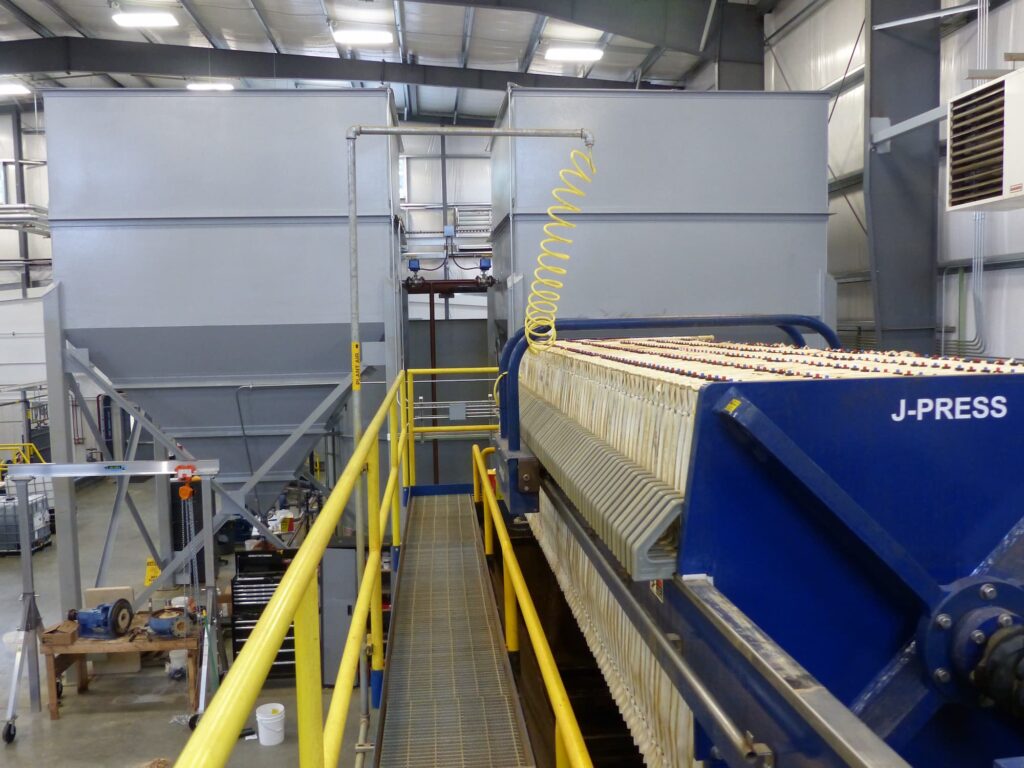
Sevenson owns and operates a full inventory of mechanical and hydraulic dredges, pumps, piping, tanks, desanding/scalping units, filter presses, centrifuges, and other essential equipment for supporting routine and complex dredging/dewatering projects
Since successfully completing work at the Marathon Battery Site, Sevenson has gained industry-leading operational knowledge in executing environmental dredging, sediment dewatering, and sediment stabilization. Sevenson’s capabilities also include water treatment associated with sediment barge decant water and slurry carriage water. Sevenson continues to work on some of the nation’s most visible and significant contaminated waterways.
Sevenson delivers industry-leading dredging and sediment remediation services across diverse marine environments. With advanced mechanical, hydraulic, hybrid dredging systems, and decades of experience on complex contaminated sediment projects Sevenson provides reliable, end-to-end solutions including dredging, dewatering, stabilization, and water treatment for some of the nation’s most challenging waterways.
Sevenson offers a range of equipment for active dewatering of sediments, including recessed chamber presses, belt presses, and centrifuges. Recessed chamber presses optimize liquid-solid separation with filter aids like lime or polymers to produce low-moisture filter cakes. Belt presses are effective for dewatering high-moisture sludge, while high-volume centrifuges offer cost-effective solutions for large remediation projects, producing dry filter cakes and high-quality effluent. For stringent oil and grease specifications, three-phase centrifuges are used. Geotextile tubes dewater sediments through porous fabric, aided by polymers, and are ideal for high-flow operations. Additionally, Sevenson utilizes the Total Clean® system in conjunction with hydrocyclones and screening plants to effectively size and separate sediment, removing large debris and fine solids for efficient dewatering and treatment.
Sevenson uses different sediment cover and capping methods depending on project regulatory requirements, specifications, project location, water depths, environmental factors, and materials needed.
Sevenson has capped thousands of acres of sediment.
We use a variety of materials, including sand, granular activated carbon (GAC), and organoclays, with placement thicknesses confirmed by hydrographic surveys. Our capping methods include mechanical capping with hydraulic excavators on barges, hydraulic capping using custom slurry spreader systems, and innovative technologies like the Radial Telebelt® conveyor system for placing aggregates. We also offer pneumatic capping, a patented system that controls material distribution and captures dust and particulates. Sevenson ensures accurate material placement with advanced equipment like RTK DGPS and DREDGEPACK® software, allowing for precise control over capping thickness and efficiency.
Sevenson works with restoration experts to design, permit, implement and monitor habitat restoration which comply with permit and plan requirements
Restoration follows sediment remediation projects and focuses on site stabilization, replanting native vegetation, and restoring aquatic habitats like wetlands. These efforts help improve water quality, support wildlife, and enhance biodiversity. Sevenson works closely with restoration experts to design, permit, implement, and monitor restoration activities, ensuring compliance with regulatory guidelines and long-term goals. We also provide ongoing monitoring and adaptive management to guarantee project success and environmental protection.
Construction, Operation and Maintenance of Temporary Water Treatment Systems
Sevenson owns and operates a full range of equipment for both temporary and permanent onsite water treatment in support of remedial construction. Our inventory includes pumps (centrifugal, air diaphragm, chemical feed), process hose, storage tanks (Modutanks, frac tanks, weir tanks), oil/water separators, clarifiers, mix tanks, polymer feed systems, and filtration systems. We can design and operate water treatment systems ranging from 50 GPM to 5,000 GPM, with a focus on redundancy to minimize downtime. Our equipment is built for rapid mobilization, and we maintain on-site backups to ensure smooth, continuous operation.
Projects