
Brooklyn, New York
The sites have a long history of commercial and industrial development dating to the late 1800s. Historical documentation indicates that the properties were below the mean water line in the late 1700s/early 1800s and were subsequently filled. Prior uses include fertilizer and chemical manufacturing, tar manufacturing, tar and resin storage, shipyard/repair, and newspaper production. Historical uses of adjoining and surrounding properties include oil refining, lumber and grain storage, dry-dock and boat repair, and manufacturing and storage of lubricating oils. Primary COCs included petroleum, petroleum tars, DNAPL, and hazardous levels of benzene and lead.
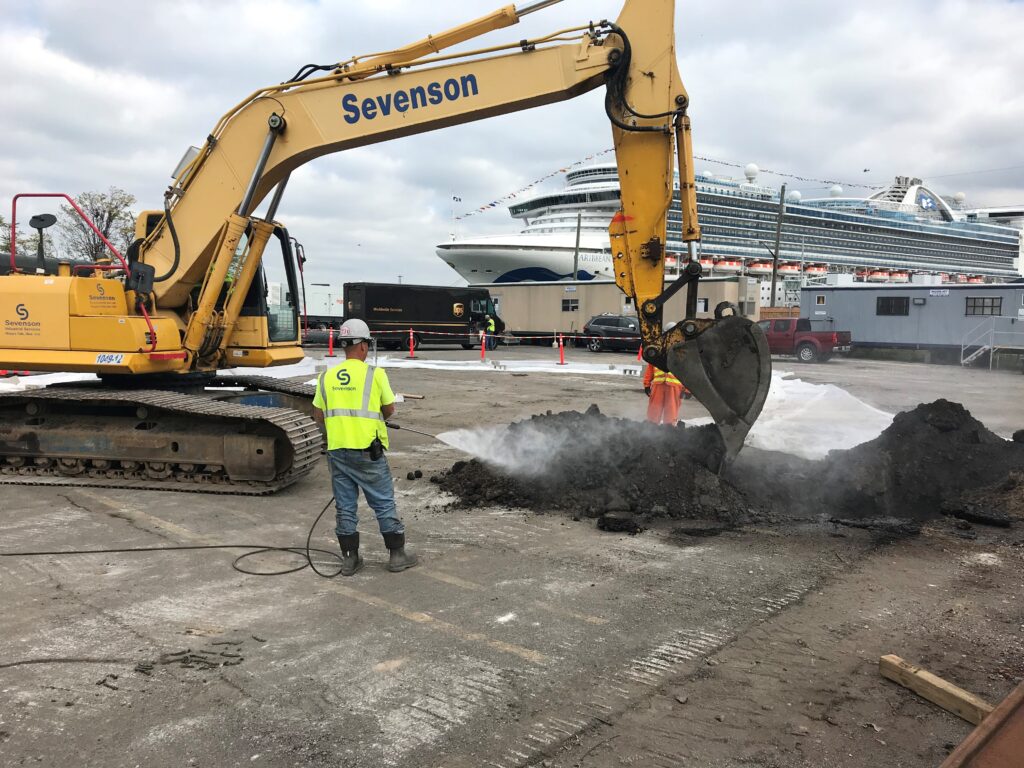
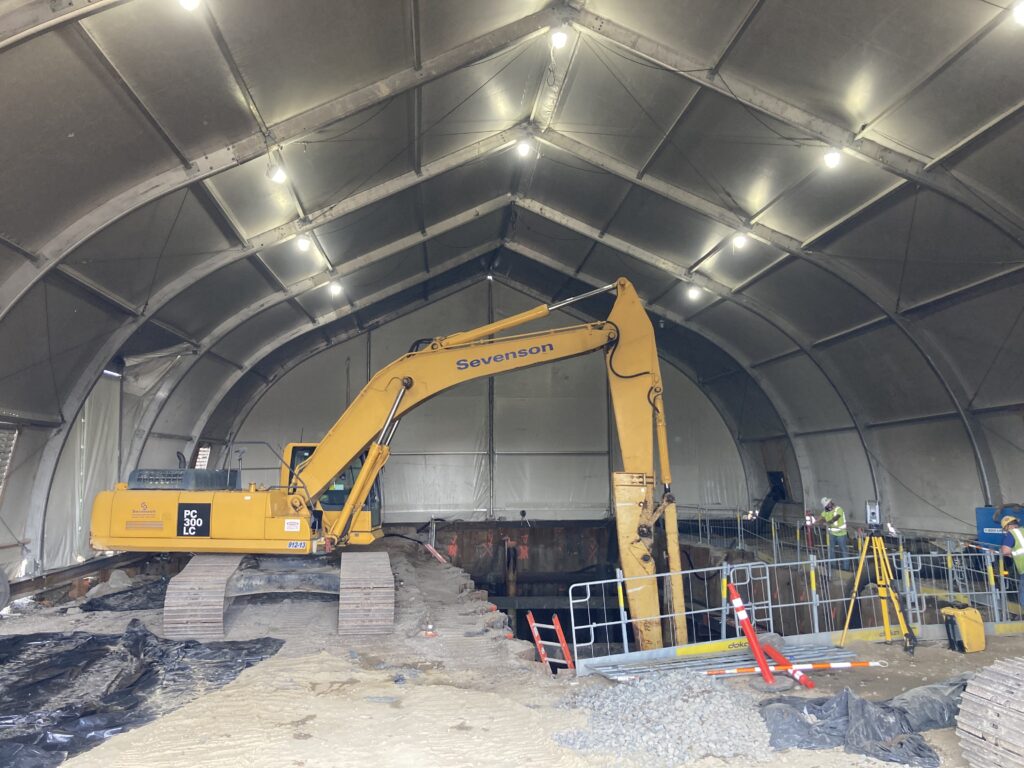
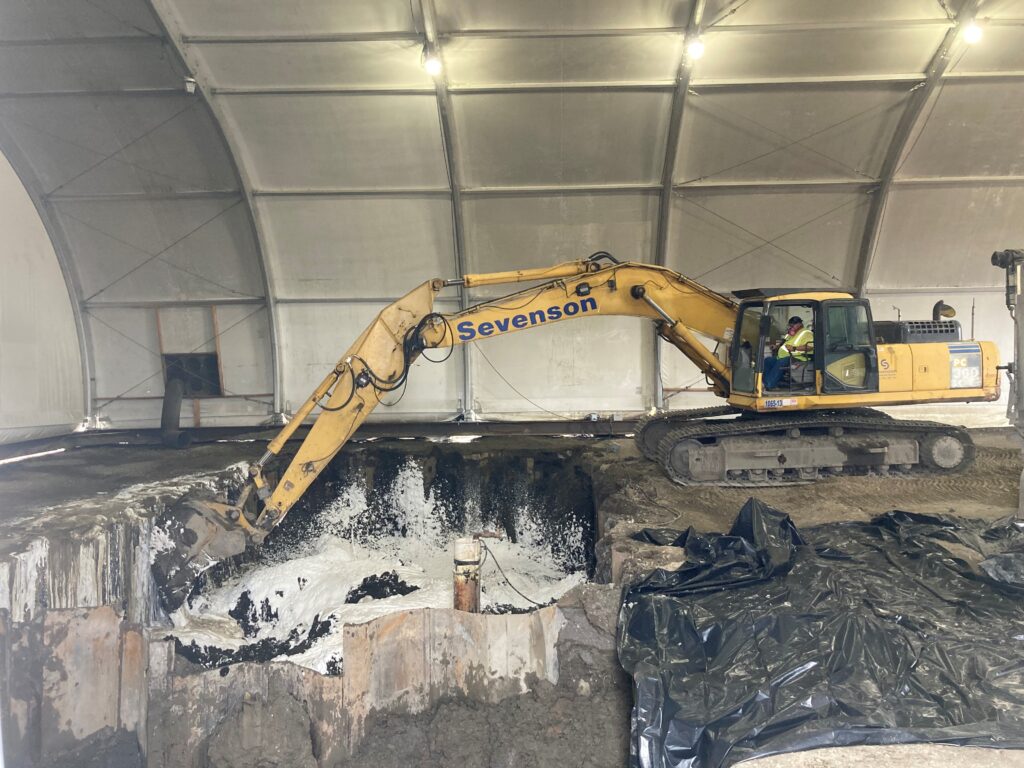
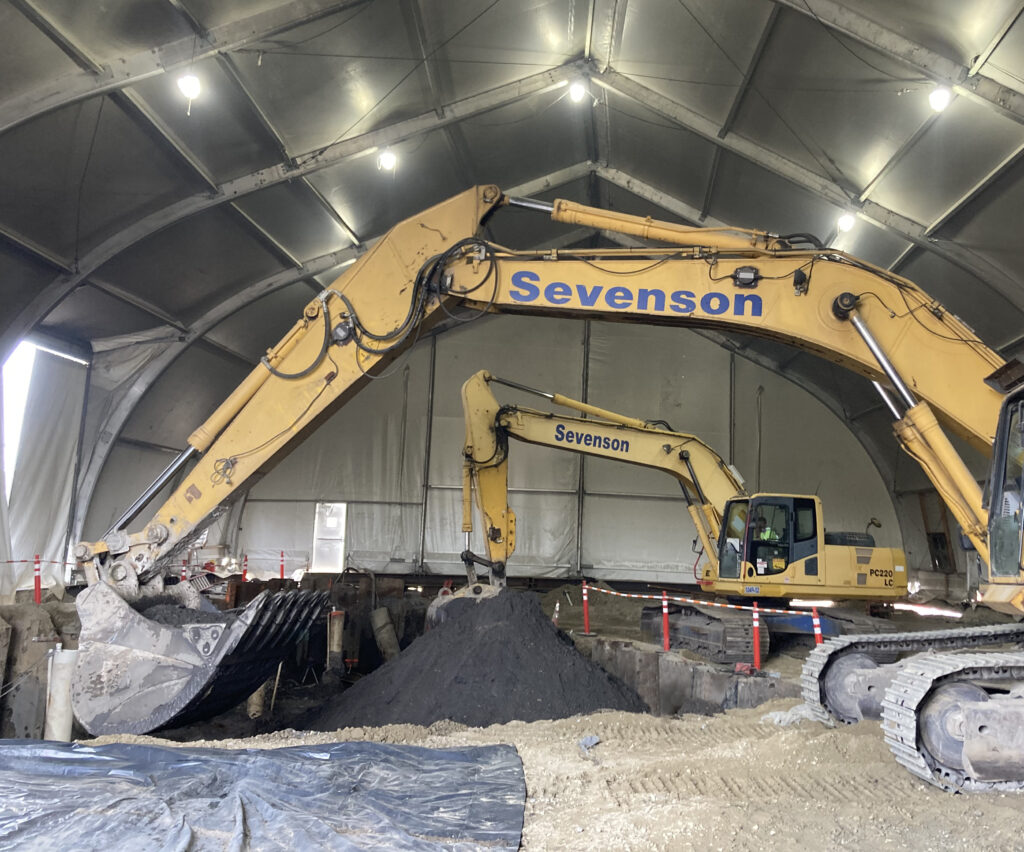
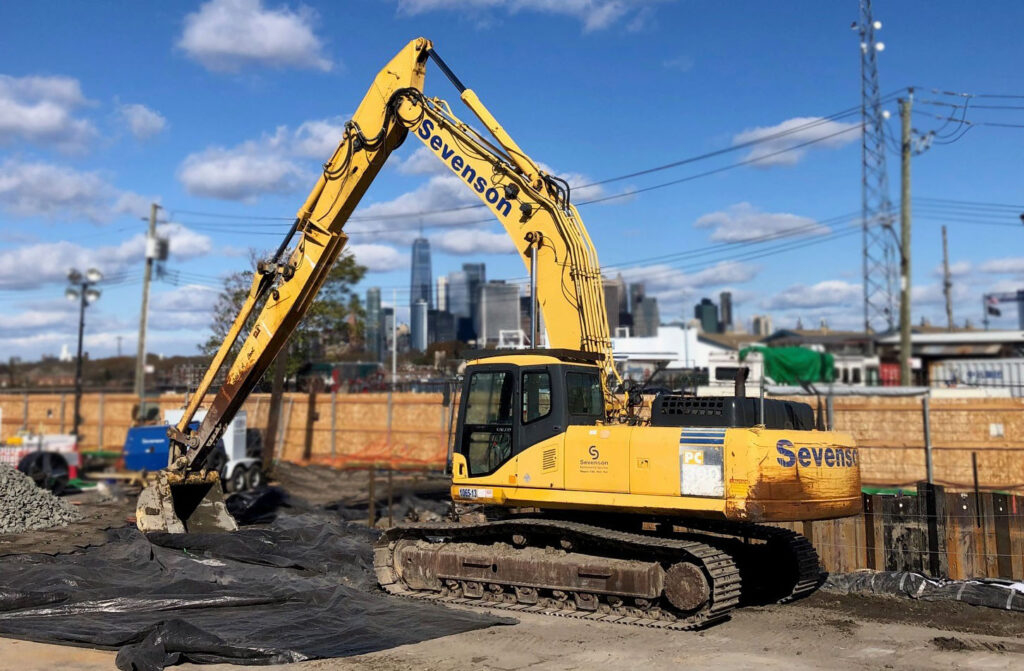
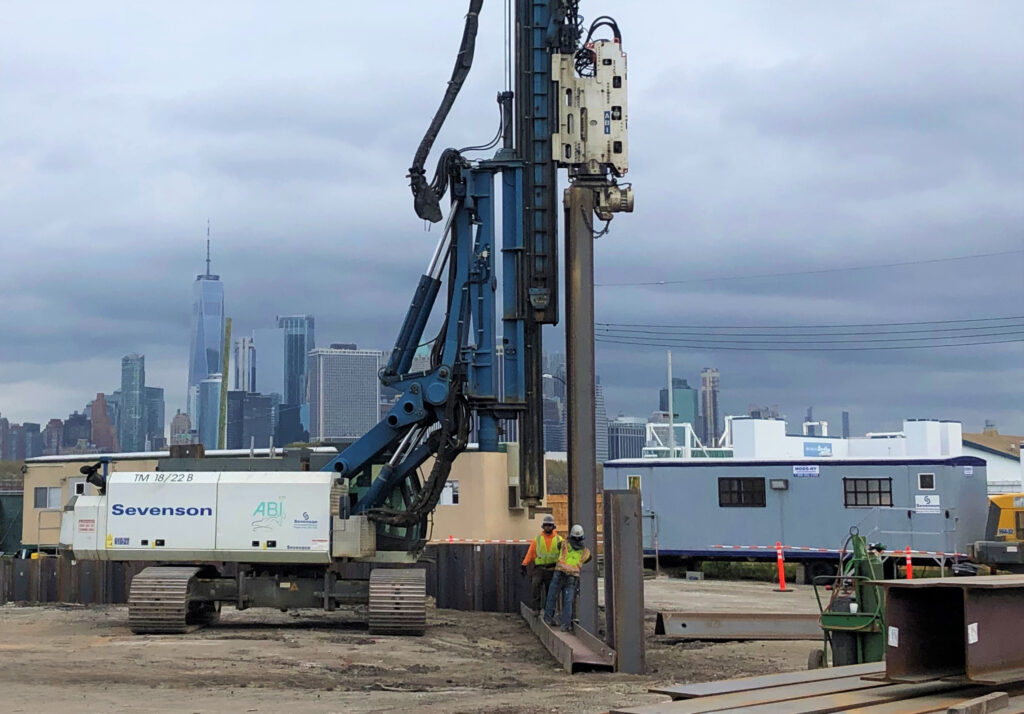
Sevenson self-performed excavation of 14,974 CY of contaminated soils to depths of up to 22.5-ft. BGS. To safely facilitate excavations, crews installed 1,862 LF of AZ19-700 water-tight steel sheet piling to a depth of 45-ft. BGS for excavation support and to prevent groundwater infiltration into excavations. Crews pre-trenched around the perimeter of the alignment to 8-ft. BGS, and pre-trenched to a maximum of 22-ft. BGS where obstructions were encountered. Sheeting was installed using an ABI Mobilram with a hydraulic vibratory hammer. In some instances where crews encountered obstructions at depths around 25-ft. BGS, using the ABI Mobilram, Sevenson deployed a hydraulic impact hammer when the vibratory hammer could not sufficiently drive piles to the required depth.