
New Bedford, Massachusetts
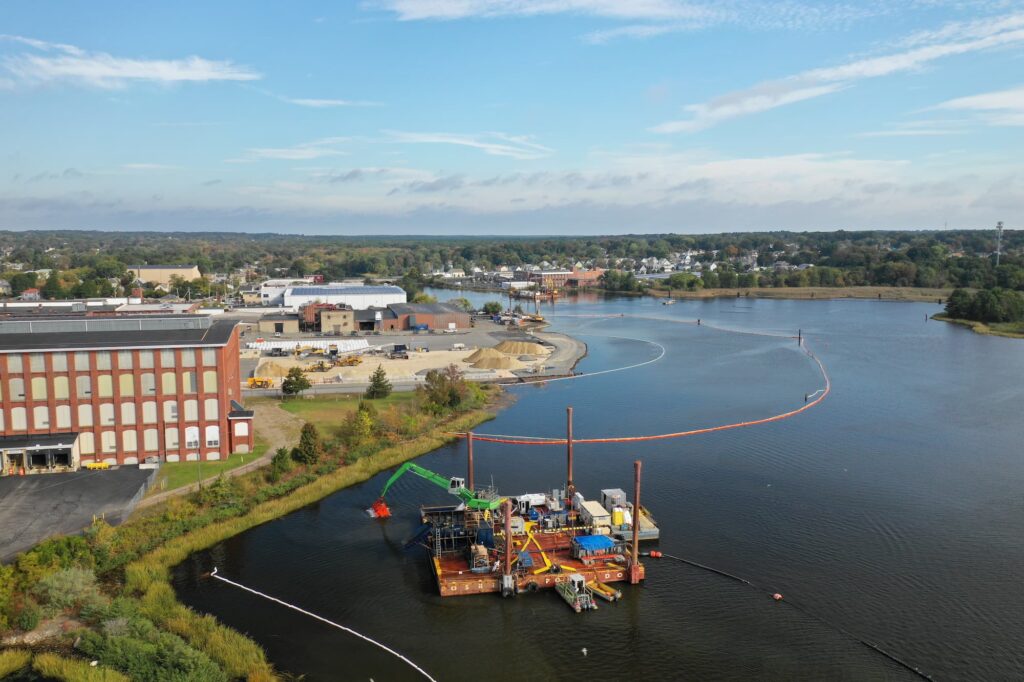
The 18,000-acre New Bedford site is an urban tidal estuary. Manufacturers in the area used PCBs while producing electric devices from 1940 to the late 1970s, when the use of PCBs was banned by the EPA. These facilities discharged industrial wastes containing PCBs directly into the harbor, and indirectly via the city’s sewerage system. As a result, the harbor is contaminated in varying degrees for at least 6 miles, from the upper Acushnet River into Buzzards Bay. Bioaccumulation of PCBs within the marine food chain has resulted in closing the area to lobstering and fishing and recreational activities. Harbor development has been limited by the widespread PCB problem.
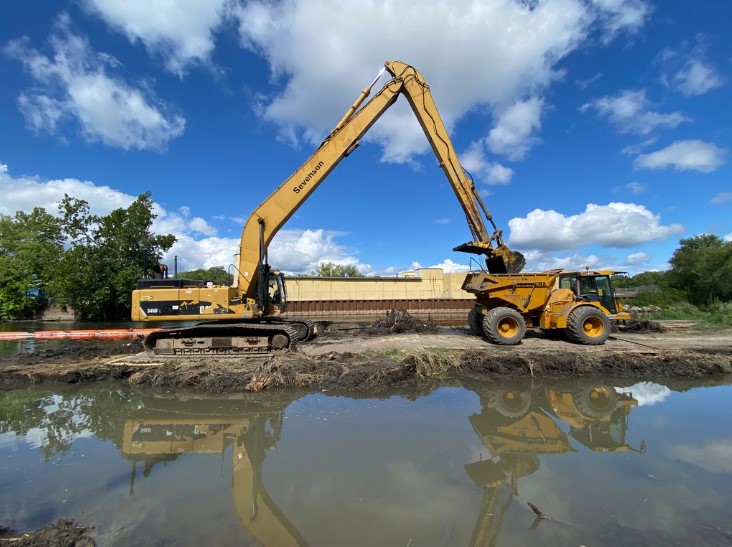
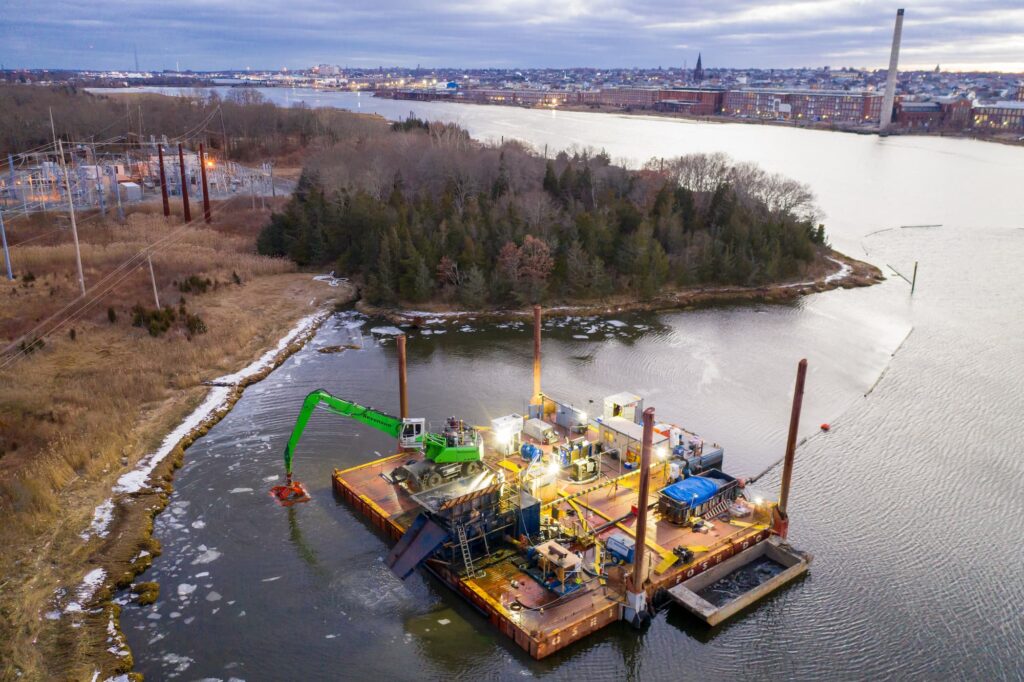
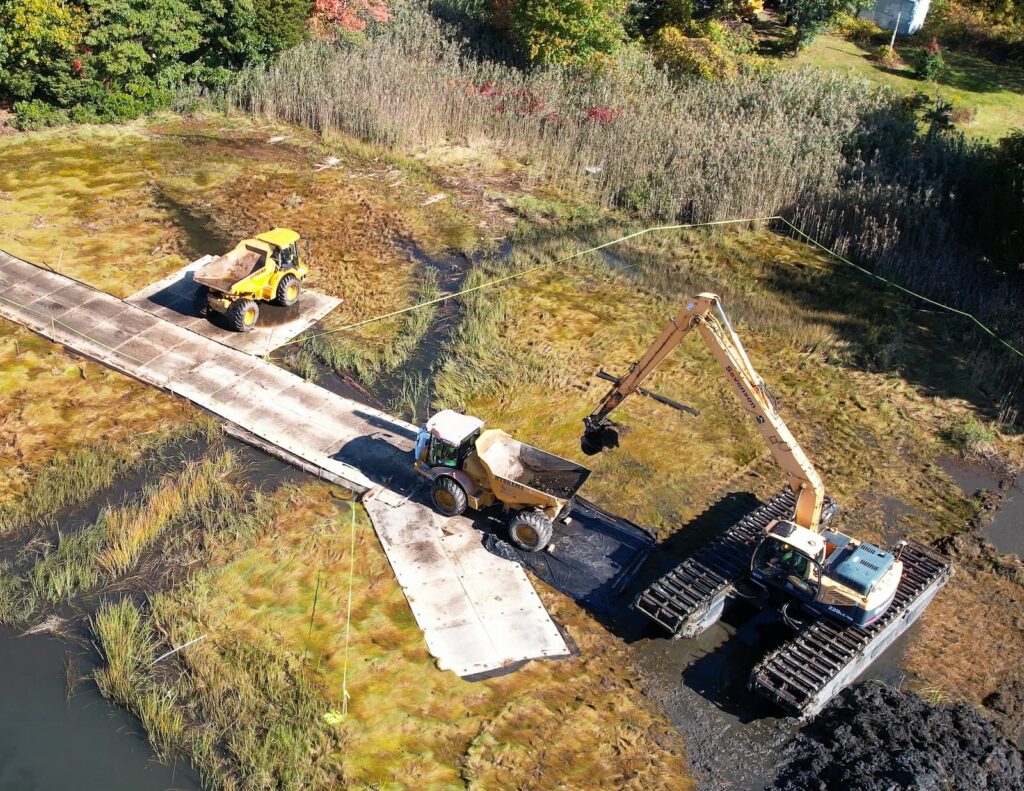
Since 2004, Sevenson has been the dredging and design-build contractor at the NBHSS, performing remedial work under multiple TOs. Sevenson redesigned the process to optimize desanding, and removal of the sand and coarser fractions enabled materials to be disposed of as non-TSCA. Our scope of work has included mechanical, hybrid, and hydraulic dredging, along with a Total Clean solids separation system with eight agitated mix tanks totaling 160,000-gallon, +10,000 LF of 6–12-in. piping, and six plate and frame filter presses, each with 220 CF capacity. The presses consistently achieved high solids (61.26% by weight average). Over 25,000 filter cakes were dropped and >500,000 tons of filter cakes were produced from 2004-2019. Other scopes of work included the removal of impacted marsh sediments; mechanical placement of subtidal capping materials; and restoration of salt water tidal marsh.