
Stratford, Connecticut
The Raymark Industries, Inc. Superfund Site includes areas that have been contaminated as a result of manufacturing processes from the former Raymark Industries, Inc. facility. The former Raymark facility operated from 1919–1989. Known as Raybestos-Manhattan, Inc., Raymark manufactured gaskets, clutches, and heavy brake friction components for the automotive industry. Raymark generated wastes containing asbestos, lead, copper, PCBs, and a variety of solvents, adhesives, and resins as byproducts of its manufacturing operations.
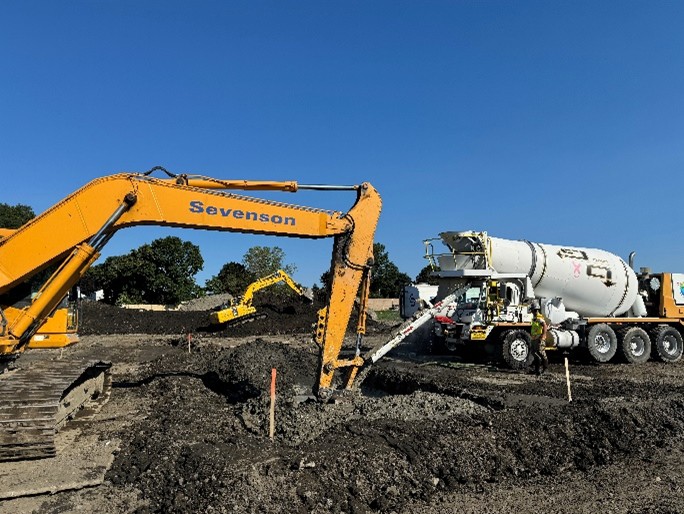
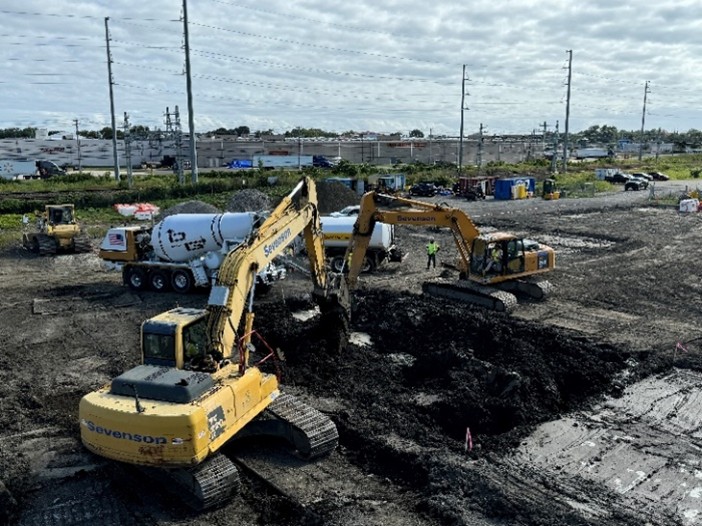
Sevenson conducted multiple pilot studies on the Raymark Waste from the Ferry Creek and Lockwood properties with different slurry mixtures to ensure stability for the landfill. The slurry was mixed with water and introduced to a cell of Raymark Waste to conduct the pilot studies. Each Pilot Study featured a different application of Portland cement (PC). The amount of CY treated determined the percentage of PC applied to a particular cell. An excavator was utilized to mix the slurry with the contaminated soils, and samples were taken. Following the five different pilot studies, Sevenson determined that it can meet the requirements with a 5% or 8% PC application; however, to begin ISS operations an 8% PC application was utilized to ensure workability in the field. Sevenson performed pilot studies to aid the remediation. Remediation activities included the excavation of residential and commercial properties, Ferry Creek excavation, including a pumped bypass system, transportation and disposal, in-situ stabilization, and completion of a RCRA landfill.
Sevenson is self-performing the excavation of contaminated soils at residential and commercial properties. Crews excavated 103,811 CY from 30 properties. Excavations have taken place in parking lots; business and residential properties along an existing water line; along and beneath structural foundations; in Ferry Creek; in a wetland area; and in a public park. Crews built a Temporary Fabric Structure (95 ft. by 134 ft.) to house soil processing operations. For RCRA-hazardous soils, Sevenson utilize MAECTITE™ to render hazardous lead material for non-hazardous disposal. By utilizing MAECTITE™ in the TFS, Sevenson has saved money for USEPA. In total, 25,000 gallons of MAECTITE™, was utilized on the project.